Stable. Steady.Yourself again.
A recovery-focused NDIS pathway that helps you rebuild routine, reconnect with your community, and get back to a life that feels like yours — at a pace that works for where you actually are, not where someone thinks you should be.
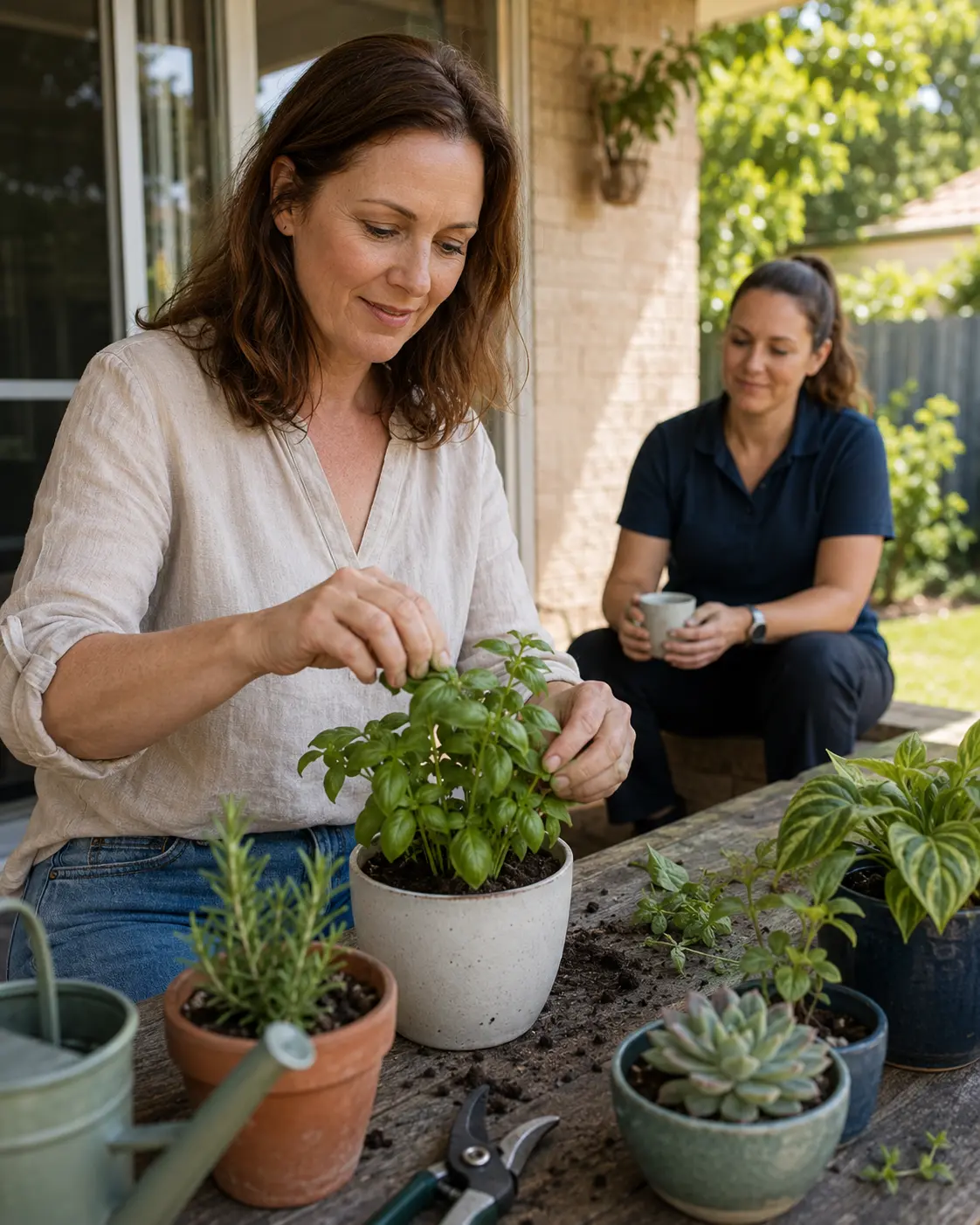
Imagine a life where… the ground stops shifting.
Not a cure, and not a transformation. Genuine, sustainable stability — the kind where life starts to feel liveable again, and then gradually, worth living fully. Built at your pace, with someone steady beside you.
- You wake up most mornings knowing what the day looks like — a routine that holds, even on the hard days.
- Your home is calm and manageable, not a source of stress on top of everything else.
- You have at least one person, outside your family, who you see regularly and who knows how you're going.
- The cycles of crisis, discharge and starting over begin to slow — because something is actually holding.
- You're making real choices about your own life again — what you eat, where you go, how you spend your time.
- Your family worries a little less — not because they stopped caring, but because things are steadier.
- You're not just managing symptoms — you're building something. A routine, a connection, a reason to keep going.
From “nothing holds” to “the ground feels steady”
Most support manages symptoms between crises. This pathway is designed to do something different — to add one layer of stability at a time, until life has a shape again.
- ●On the bad days you can't get out of bed, and the whole routine falls apart.
- ●You've just come out of hospital and don't know how to get back to normal life.
- ●You've been through so many workers — every time you build trust, they leave.
- ●You're isolated, seeing almost no one except family, and even that is hard.
- ●You keep ending up back in crisis. Nothing holds between episodes.
- ●You have a psychiatrist and a psychologist, but no one for the everyday stuff.
- ✓One simple daily anchor that holds — even on the harder days.
- ✓A steady step back into routine, home and life after hospital.
- ✓The same matched worker, who stays — trust you don't have to keep rebuilding.
- ✓One regular, low-pressure connection outside your family.
- ✓The crisis cycle loosening — setbacks that recover faster each time.
- ✓Someone for the everyday, working with your clinical team, never apart from it.
Built for people rebuilding after disruption
This pathway is for you if…
- ✓Your mental health affects your daily life and functioning.
- ✓You've recently been discharged from hospital or a mental health facility.
- ✓Your routine has broken down and you don't know where to start.
- ✓You cycle through crisis and recovery and want to break the pattern.
- ✓You're working with a psychiatrist, psychologist or mental health team.
- ✓You have a psychosocial disability funded through the NDIS.
A few honest notes…
- —We don't provide clinical treatment, diagnosis or therapy — that stays with your clinicians.
- —We're not a crisis service. If you're in immediate danger, call 000, or Lifeline on 13 11 14.
- —We work best alongside an existing or forming clinical team, not instead of one.
Not sure if it's a fit, or not connected to a clinical team yet? Call us anyway — we'll talk it through calmly and help you work out the right first step.
What you might be carrying right now
We hear the same things from participants and families when they contact us about recovery support. If any of these sound familiar, this pathway is for you.
Recovery from psychosocial disability is not linear.
There will be hard days, setbacks, and stretches where progress feels invisible. We want to be clear about that, because most support treats a setback as a failure — a reason to stop, restart, or give up. Here, a setback isn't a failure condition. It's part of the process we plan for — built into how the pathway is paced, and into the Crisis Safety Plan your worker holds with you.
You don't have to have it figured out to start.
Four stages. One layer of stability at a time.
The pace is set by you, not by a schedule. Setbacks don't restart the pathway — they're part of it. The goal at every stage is the same: to add one more layer of stability to a life that is actively being rebuilt.
Ground
Safety and basic stability
Rebuild
Routine, home, connection
Strengthen
Capacity and resilience
Sustain
Stability, and a future
Establish safety and basic stability
- Build trust with a consistent, matched support worker — before anything else
- Understand your daily rhythms — the good hours, the hard days, the warning signs
- Establish one simple, sustainable anchor — a morning, midday or evening routine
- Basic home stability — personal care, meals, medication prompts, safety
- A Crisis Safety Plan developed with you and held by your worker
- Your clinical team introduced to Anchor & Aim — coordination of care established
Re-establish routine, home and connection
- Daily and weekly routine expanded and stabilised — meals, sleep, activity rhythm
- Home brought back under control — cleaning, organisation, medication management
- Community reintroduced gently — one regular, low-pressure outing a week
- Reconnection with meaningful activities or groups from before the disruption
- Supported attendance at medical, allied health and clinical appointments
- Carer load reviewed — specific tasks formally handed to your worker
Build capacity and resilience
- Life skills embedded into daily routines — cooking, budgeting, home management
- Social confidence building — regular participation, groups where wanted
- Self-advocacy — communicating your needs to clinicians, family and community
- Relapse-prevention planning, specific to you and reviewed regularly
- Travel independence where appropriate — getting to appointments yourself
- Your worker begins to step back in areas of growing confidence
Maintain stability and build the future
- Formal 90-day wellbeing reviews — tracking stability, independence and goals
- Routine maintenance — keeping what works working, through disruptions
- Future planning — employment, study, relationships, housing, community
- Peer connection and natural support development
- Gradual reduction in formal support hours as independence grows
- A clear plan for what happens if things deteriorate — early intervention before crisis
What is Recovery Coaching?
Psychosocial Recovery Coaching is a specific NDIS support delivered by a trained Recovery Coach — not a psychologist or psychiatrist, but a specialist who works alongside your clinical team to build the everyday routines, skills and connections that clinical treatment alone doesn't cover.
A Recovery Coach helps you understand your NDIS plan, set meaningful goals, coordinate your supports, and work through the practical barriers to recovery. It's funded through Capacity Building — and it fills the gap between the clinic and your daily life.
Alongside your clinical team — never instead of it
This pathway complements your clinical treatment. We work directly with your psychiatrist, psychologist, case manager or community mental health team so everything is aligned. We don't work in isolation from your clinical team. Ever.
- A Recovery Coach does: build routines and life skills, coordinate your supports and clinical team, reduce isolation, and hold your Crisis Safety Plan.
- A Recovery Coach does not: provide clinical treatment, diagnose, replace your clinicians, or make decisions about medication.
What your first three months can look like
Recovery doesn't move in a straight line, and this is a composite — not a specific participant. It's here to show the shape of early progress when the worker match, the pacing and the clinical coordination are working together.
The same face, twice
The same worker shows up twice in the first week. You begin to recognise a face — and a basic routine is sketched out together, gently. There's no pressure to achieve anything. The only goal is that someone safe and consistent is now here.
One anchor holds
One daily anchor starts to hold — a consistent morning routine, an evening check-in, a regular meal. By week three, you leave the house for a non-medical reason. Even briefly. Even reluctantly. That counts.
The home feels calmer
The home is calmer. Medications are being managed, appointments are being kept, and your Crisis Safety Plan is in place. The background noise of daily stress begins to quieten.
A setback — and a faster recovery
You mention something you'd like to do — an interest, an activity, a place you want to go. Then a setback happens, and the recovery is faster than last time. You notice this yourself. That's the pattern starting to loosen.
Illustrative only. The specific moments and timeframes shown here are an example of how recovery can unfold — not a guaranteed outcome. Your pathway is paced entirely around where you actually are.
We don't just hope things are steadier. We track it.
Progress here is gentle and non-linear — so we track it carefully rather than assuming it. We review six recovery domains at the start and at each formal wellbeing review, so you, your family, your coordinator and your clinical team can all see what's actually holding.
Daily Routine
A consistent, participant-led routine that holds on most days — including the hard ones.
Home Stability
A clean, manageable home — no longer a source of additional stress.
Mental-Health Self-Management
Better awareness of early warning signs, faster recovery from setbacks, fewer crises.
Community Connection
Regular, meaningful community contact — reduced isolation, more connection.
Independence
More daily tasks managed yourself — less reliance on formal and informal supports.
Clinical Coordination
All supports and clinical treatment working from one plan — no gaps, no duplication.
Small wins, quietly real
Recovery doesn't look like progress in a straight line. But momentum matters — and even on a pathway as gradual as this one, early wins are real and worth naming.
The same worker shows up twice — a face you begin to recognise.
One daily anchor holds — a morning routine, a check-in, a regular meal.
You leave the house for a non-medical reason. Even briefly.
The home is calmer, medications managed, the Crisis Safety Plan in place.
These are not guarantees. They're examples of what early progress often looks like when the worker match, the pacing and the clinical coordination are working together.
Everything that makes it actually work
Most providers send a worker and an invoice. The pathway is a complete system — assessment, planning, consistency, measurement and reporting — built around you.
- ✓A calm first conversation and recovery assessmentNo forms, no pressure — just where things are now, and a gentle picture of your starting point.
- ✓A matched, consistent support workerTrust you don't have to keep rebuilding — the relationship is the foundation of everything in Stage 1.
- ✓A Crisis Safety Plan, developed with youHeld by your worker, with your early-warning signs documented and built into their awareness.
- ✓Psychosocial Recovery CoachingPlan navigation, meaningful goal-setting and coordination of your whole support team.
- ✓Coordination with your clinical teamWe work directly with your psychiatrist, psychologist or case manager — never in isolation.
- ✓Daily living & home supportPersonal care, meals, medication prompts and home stability — the everyday foundations.
- ✓Gentle community reconnectionOne regular, low-pressure outing to start, built up only as fast as feels right.
- ✓Relapse-prevention & early-intervention planningSpecific to you and reviewed regularly — so support arrives before crisis, not after.
- ✓Culturally responsive support for CALD communitiesWhere psychosocial needs intersect with cultural factors — cultural, faith and language matching is woven into our intake from the first conversation, never a premium add-on. Hindi, Punjabi and more.
- ✓90-day wellbeing reviews & fortnightly updatesSo your family, coordinator and clinicians all stay aligned — without anyone chasing.
The risk is on us
Trying again after past disappointments takes courage. So these aren't vague reassurances — they're commitments in writing, several with a concrete consequence if we fall short.
The Consistency Guarantee
The same matched worker through your whole first 90 days — because on this pathway, trust is the intervention, and being passed between strangers is the opposite of recovery.
The Fast-Start Guarantee
Your first session within five business days of you being ready — and a first call answered within two business hours, calmly, with no forms.
The Communication Guarantee
Fortnightly written updates, a reply within two business hours, and same-day contact with you or your nominated person about any welfare concern.
Alongside your clinicians, always
We coordinate directly with your psychiatrist, psychologist, case manager or mental health team, so everyone works from the same plan. We do not provide clinical treatment, and we never work in isolation from your clinical team.
Setbacks are planned for, not punished
A hard day or a setback never restarts your pathway or ends your support. The pace simply adjusts to where you are, your Crisis Safety Plan is already in place, and early-intervention steps are built in.
The 30-Day Fit Promise
If within the first 30 days this pathway isn't the right fit, we co-manage your transition — in step with your clinical team — to support that is. You are never left without help.

“I built Anchor & Aim to be the provider I'd want for someone I love — small enough to know your name, serious enough to do the work properly. The guarantees on this page aren't marketing lines. They're the standard I hold every shift to — and if we ever fall short, I want to hear from you directly.”
The proof behind the promises
Director-led
You deal with a named director who answers the phone — not a call centre or a rotating account manager.
Every worker screened
Current NDIS Worker Screening clearance, plus our own reference and working-with-children checks.
Qualified team
Cert III/IV in Individual Support or Disability, with first aid, mental-health first aid and trauma-informed training.
RN-led clinical oversight
Nursing and high-intensity supports are registered-nurse-led, with clear clinical governance behind them.
Fully insured
Public liability, professional indemnity and workers compensation cover — all current.
Genuinely local
Ringwood-based, with real on-the-ground knowledge of Melbourne's east and south-east.
Multilingual, CALD-aware
Hindi, Punjabi and English spoken, with workers matched to your culture, faith and language where we can.
NDIS Practice Standards
We are an NDIS Registered Provider operating to the NDIS Practice Standards. Registration ID 4-MBOQFEG. NDIA-managed (Agency-managed), plan-managed and self-managed participants welcome.
Want to verify any of this, or talk to us before you refer? Coordinators start here or call 0411 727 133.
Built for the whole picture
Recovery holds better when everyone is working from the same plan. This pathway is designed for the participant, their family, their coordinator and their clinical team — together.
Participants
- Support beside you, never done to you — you lead your own recovery
- The same trusted face, at a pace that respects the hard days
- Setbacks met with steadiness, not judgement
Families & Carers
- Carer load formally shared — specific tasks handed to your worker
- Worry eases as things steady; carer wellbeing matters here too
- Kept informed, with your role sustainable rather than all-consuming
Support Coordinators
- Recovery Coaching plus daily-living support, coordinated as one plan
- Active coordination with the clinical team — no gaps, no duplication
- Wellbeing-review evidence ready for plan reviews
Clinical Teams
- A reliable partner for the everyday work between appointments
- We share the same plan — and never work in isolation from you
- Early-warning signs monitored and escalated appropriately
How it's funded
The Recovery & Stability Pathway™ draws on several NDIS support categories — the mix shifts over time, with early stages more intensive and later stages progressively lighter as independence grows. We confirm the applicable line items with your plan manager before any billing begins.
- Recovery Coaching — goal-setting, plan navigation, clinical coordination — CB: Support Coordination (Recovery Coach)
- Daily living — personal care, meals, home routine, medication prompts — Core: Assistance with Daily Life
- Community participation & reconnection — Core: Social, Economic & Community Participation
- Life skills development — cooking, budgeting, self-advocacy — CB: Improved Daily Living
- Travel training to appointments & activities — CB: Increased Social & Community Participation
- High-intensity support, where complex needs require it — Core: Assistance with Daily Life (High Intensity)
Because the pathway spans both Core and Capacity Building, we bill each task to the correct budget — daily-living support like personal care and meals under Core, and capacity-building work like recovery coaching and relapse planning under Capacity Building — so invoices stay clean and audit-ready for your plan manager.
Not sure where to start?
You don't need to know what supports you need, or what your plan covers. Call 0411 727 133 and we'll read through your NDIS plan with you, calmly — explaining what's available and what a realistic first step looks like from where you are right now.
We welcome NDIA-managed (Agency-managed), plan-managed and self-managed participants across Melbourne's eastern and south-eastern suburbs.
Good to know
How long does the pathway take?
There's no fixed timeframe. Recovery isn't linear — early stages are more intensive, and support gradually lightens as stability and independence grow. The pace is set by you, not by a schedule, and setbacks don't restart the pathway; they're planned for as part of the process.
What is Psychosocial Recovery Coaching?
It's a specific NDIS support delivered by a trained Recovery Coach — not a psychologist or psychiatrist, but a specialist who works alongside your clinical team to help you build the everyday routines, skills and connections that clinical treatment alone doesn't cover. It's funded through Capacity Building, and it fills the gap between the clinic and your daily life.
Does this replace my psychiatrist or psychologist?
No. This pathway complements clinical treatment — it never replaces it. We work directly with your psychiatrist, psychologist, case manager or community mental health team so everything is aligned. We don't provide clinical treatment, diagnosis or crisis intervention, and we don't work in isolation from your clinical team.
What NDIS funding do I need?
The pathway draws on Capacity Building (Recovery Coach / Support Coordination, Improved Daily Living, Increased Social & Community Participation) and Core Supports (Assistance with Daily Life, Social & Community Participation), depending on your plan and recovery stage. We confirm the applicable items with your plan manager before billing.
What happens if I have a setback or a bad day?
Setbacks are expected, and they don't undo your progress or restart the pathway — they're planned for. Your worker holds a Crisis Safety Plan developed with you, the pace adjusts to where you actually are, and early-intervention steps are built in to help reduce the chance of reaching crisis.
Where do you provide the pathway?
In your home and in your community, across Melbourne's eastern and south-eastern suburbs, coordinated with your clinical and allied health appointments.
Can my family or coordinator be involved?
Absolutely — with your consent, they receive progress updates and review reports, so everyone supporting you is on the same page.
Can this run alongside a mental health service like MHCSS or PARC?
Yes, with coordination. This pathway is designed to work alongside Victorian mental health services — whether that's a community mental health team, a Mental Health Community Support Service, or a stay in Prevention and Recovery Care (PARC). We coordinate with those teams the same way we do with your treating clinicians, so your supports complement each other rather than duplicate or clash.
What people are saying
I've had recovery coaches before who felt more like compliance officers checking boxes on a form. When my anxiety spikes, I don't want to talk about goals; I just need someone to help me ground myself. The team here actually gets that. They didn't rush me. We spent the first few weeks just figuring out what a 'good day' even looked like for me. Now, when things start getting overwhelming, we have an actual plan ready to go. For the first time in years, I feel like I'm driving my own life instead of just reacting to it.”
RohanParticipant
Finding a recovery coach who actually understands the intersection of psychosocial disability and the NDIS framework is incredibly rare. Usually, I'm chasing providers for progress reports or trying to decipher vague case notes. The documentation from this team is exemplary — they map everything directly to the participant's capacity-building goals and speak the NDIA's language. It makes plan reviews infinitely smoother because the evidence of stability and growth is right there on paper.”
Melinda K.Support Coordinator
When my brother is going through a tough mental health patch, the pressure usually falls entirely on our family to keep things afloat. Having a dedicated recovery coach who steps in with actual crisis-minimisation strategies has been a lifesaver. They don't just show up for their hours and leave; they work collaboratively with his clinical team and keep us in the loop without overstepping. Seeing him proactively manage his triggers instead of spiralling has given our whole family our weekends back.”
PriyaSister & Carer
Recovery is possible. You don't have to have it figured out to start.
You don't need to be at a certain point in your recovery to contact us. You don't need to know what supports you need, or what your NDIS plan covers. Just tell us where things are right now, and we'll help you work out what the first step looks like. The first call is calm — no pressure, no forms. Just us listening.
For families and carers: if you're supporting someone whose mental health is affecting their daily life — and you're exhausted, scared, or don't know what to do next — please call. You don't have to have the right words. Just tell us what you're seeing and we'll help you work out whether this pathway is a fit. Carer wellbeing matters here too. We respond within 2 business hours.