Complex needs.
Capable hands.
When support needs to be clinically informed, carefully trained, and always delivered with dignity — we're here. Experienced staff, consistent oversight, and a steady presence for participants with complex daily needs.
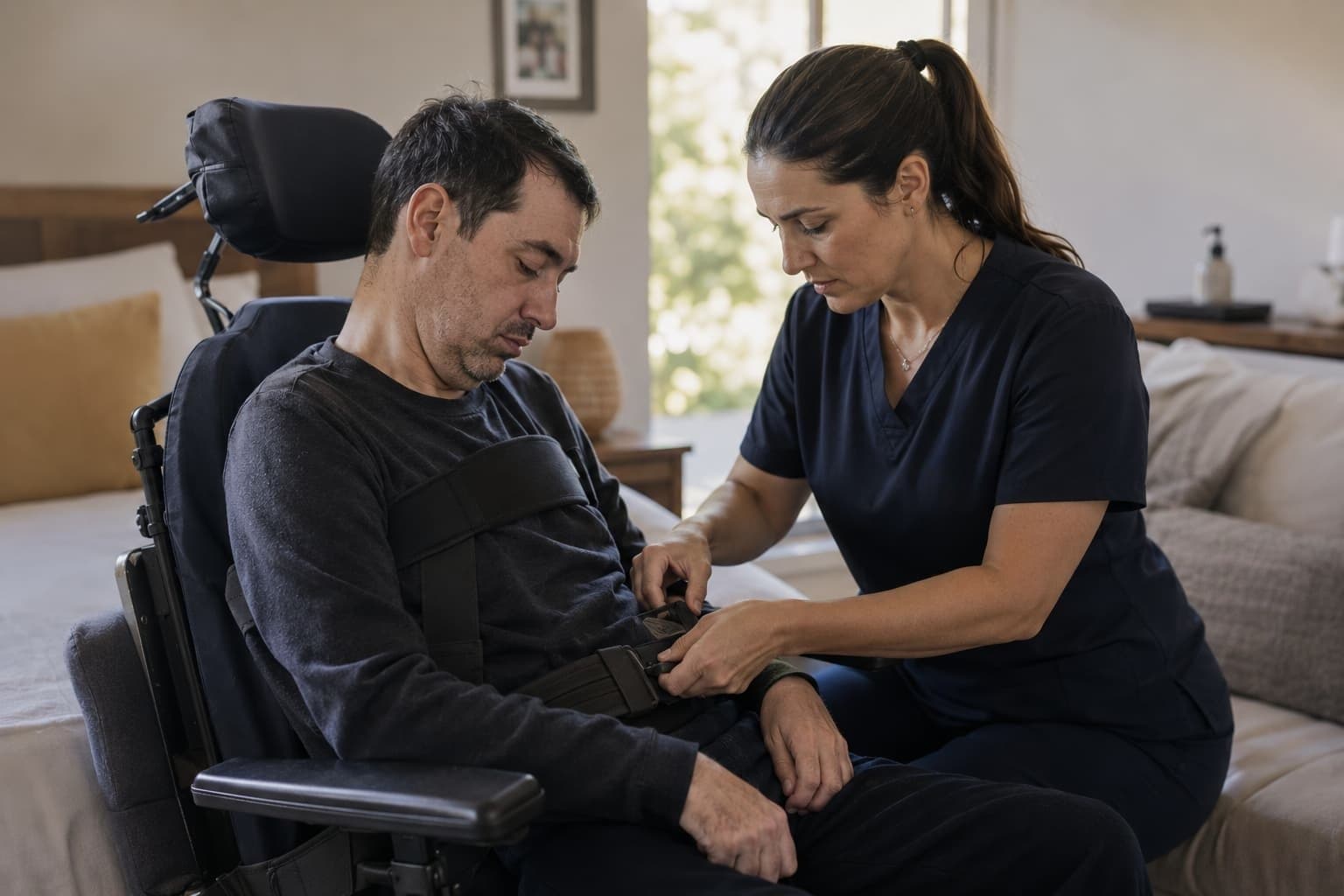
Careful, skilled,
and never rushed
High Intensity support covers the parts of daily life that need more than general training — the personal care tasks, health procedures, and behavioural supports that require specific competencies, clinical sign-off, and the right person delivering them.
For families, this is often where the search for a provider gets difficult. Many services say they can help, but fewer can honestly show the training, oversight and consistency that high intensity support actually requires. We take this seriously — which means being upfront about what we deliver, how we deliver it, and what sits outside our scope.
We are regulated under the NDIS High Intensity Skills Descriptors, and we build our teams to meet them properly — not as a tick-box, but as the baseline for safe, dignified care.
The specific supports
we're trained to provide
Each of these is delivered by staff specifically trained and signed off for the task — with documented care plans, clinical handover notes, and regular review. If your need isn't listed, ask — we may still be able to help with the right partners.
Mealtime Management
Support for participants with dysphagia, modified textures, PEG feeding and specific mealtime plans developed by speech pathologists.
Complex Medication Support
Administration of prescribed medication including PRN, controlled medications, injections and medication via non-oral routes under documented protocols.
Stoma & Bowel Care
Ostomy care, routine bowel management programs and support with continence plans — delivered with privacy and practised consistency.
Ventilation & Tracheostomy
Support for participants using ventilators, BiPAP, CPAP and tracheostomy care — in partnership with your clinical team and always within documented care plans.
Catheter Care
Routine catheter care including indwelling and suprapubic catheter management, bag changes and infection-prevention protocols.
Seizure Support
Support for participants with epilepsy and seizure disorders, including documented response protocols, PRN medications and post-seizure care.
Complex Wound & Skin Care
Pressure-area care, wound monitoring, dressing changes within scope, and escalation to clinical teams when needed.
Manual Handling & Transfers
Assisted transfers, hoist use, two-person lifts and repositioning — delivered within risk-assessed handling plans that protect participant and worker.
Behaviour Support Implementation
Consistent implementation of positive behaviour support plans developed by registered behaviour support practitioners — as part of a broader team, not in isolation.
The framework behind
every shift
High intensity support is only as good as the systems that hold it together. Here's how we structure safety around every participant.
Trained to
Each Task
Support workers are trained and signed off for the specific tasks they deliver — not trained generally and assumed competent. Training is refreshed regularly.
Clinical
Oversight
A Registered Nurse oversees care planning, competency sign-off and complex cases. Clinical escalation is built into every care plan — not an afterthought.
Individualised
Care Plans
Every participant has a written care plan detailing their supports, preferences, risks and escalation points. Plans are reviewed, not filed and forgotten.
Consistent
Staffing
Small, familiar teams — not rotating casuals. Staff know the participant, the equipment, and the plan. Handovers are structured, not whispered.
Situations where
high intensity fits
High Intensity support is for NDIS participants whose daily needs require more than general personal care. The common thread is that the support cannot be safely delivered without specific training or clinical oversight.
-
Living with complex medical needs
Participants managing conditions such as epilepsy, chronic respiratory needs, dysphagia, or neurological conditions that require trained support.
-
Post-acute or rehabilitation recovery
Participants returning home after hospital with ongoing clinical needs during recovery — coordinated closely with discharge plans and clinical teams.
-
Progressive conditions requiring increasing support
Participants whose needs are changing and who need a provider able to scale support over time without disruption to consistency.
-
Behavioural needs with a positive behaviour support plan
Participants with documented behaviour support plans that need consistent, skilled implementation across the people who support them.
-
Families looking for a change after provider instability
Families whose previous experience has been fragmented, rushed, or poorly coordinated — and are looking for a provider that treats complex needs with the care they deserve.
We coordinate.
We don't replace.
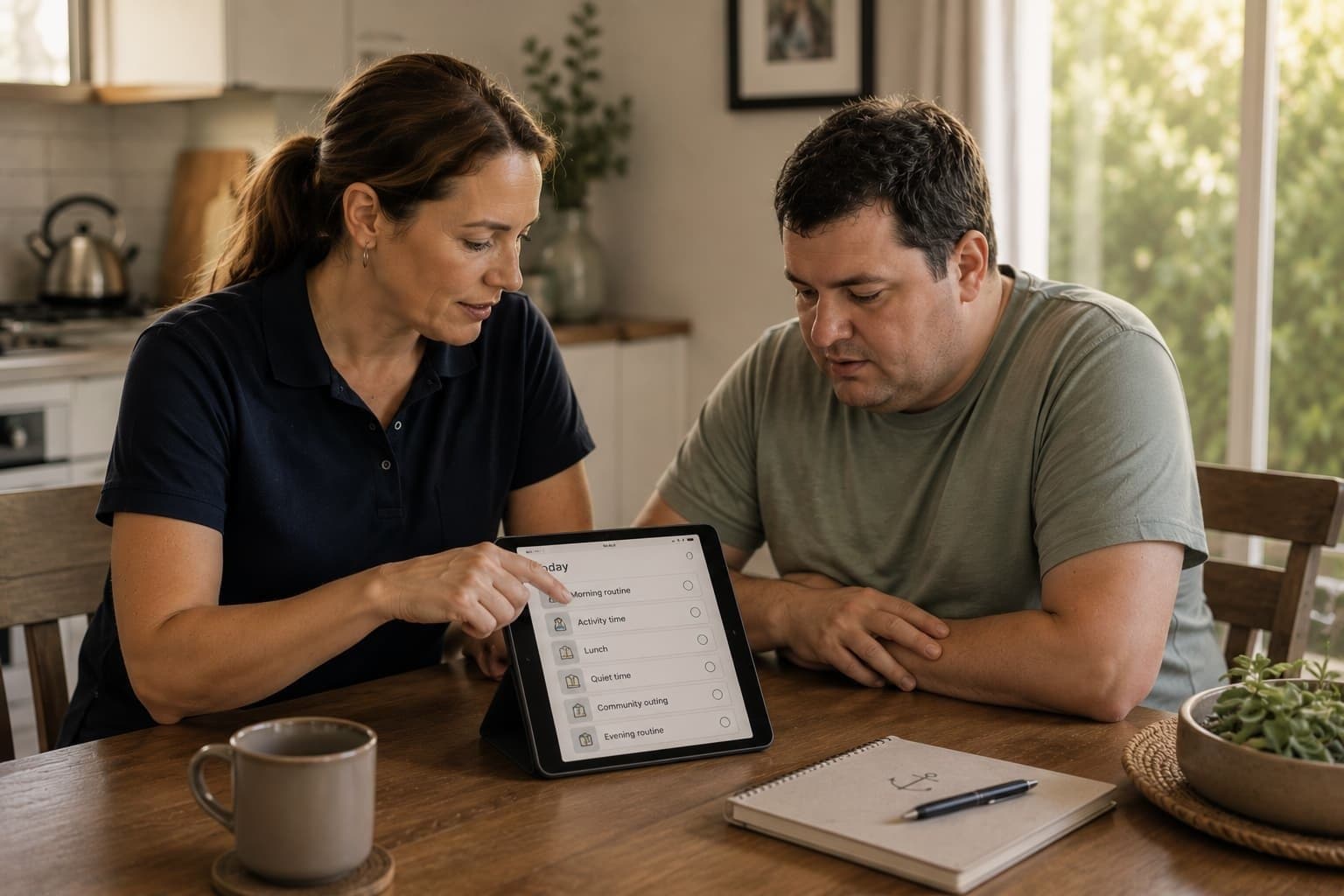
High intensity support works best when everyone around the participant is in sync. We make a point of building working relationships with the allied health professionals and clinicians already involved in your care — not working around them.
That means shared care plans, attending key meetings when invited, structured handover between us and clinical teams, and timely escalation when something needs a clinician's attention.
We commonly coordinate with:
What high intensity
support isn't
Being upfront about the edges of our role matters — especially with complex needs. Here's what we're not, so you know what you'll need alongside us.
An emergency service
If there's a medical emergency, the response is always 000 first — then us. Our staff will follow emergency protocols and escalate, but we don't replace paramedics or hospital care.
Community nursing
We're a disability support provider — not a nursing service. Tasks requiring a registered nurse in the home (e.g. complex IV, new wound assessment) are delivered by nursing providers working alongside our support.
A diagnostic or assessment service
We don't diagnose conditions or develop clinical care plans. Behaviour support plans, mealtime plans and clinical protocols come from qualified practitioners — we implement them consistently.
For every complex need
If the safe delivery of support requires skills, equipment or staffing levels we can't properly provide, we'll say so — and help you find a provider that can. We'd rather be honest than overreach.
How it's funded
High intensity supports are typically funded under Core Supports — Assistance with Daily Life in your NDIS plan, at the High Intensity pricing tier where your plan allows it.
We welcome NDIA-managed (Agency-managed), plan-managed and self-managed participants.
Not sure if it's in your plan?
High Intensity funding is usually included in plans where there's evidence of complex needs. If you're not sure — your support coordinator or local area coordinator (LAC) is a good first port of call, and we're happy to look through your plan with you.
Call 0411 727 133 for a plain-English chat about what's possible.
Ready for a careful
conversation?
Complex needs deserve a real conversation, not a quick website enquiry. Tell us what you're navigating — we'll listen carefully, ask the right questions, and give you an honest answer about what we can and can't do.