Skills that
stick
Practical, patient coaching on the skills that build independence — money, cooking, travel, tech, social confidence, self-advocacy. Taught in real life, where it counts.
Learn it where
you'll use it
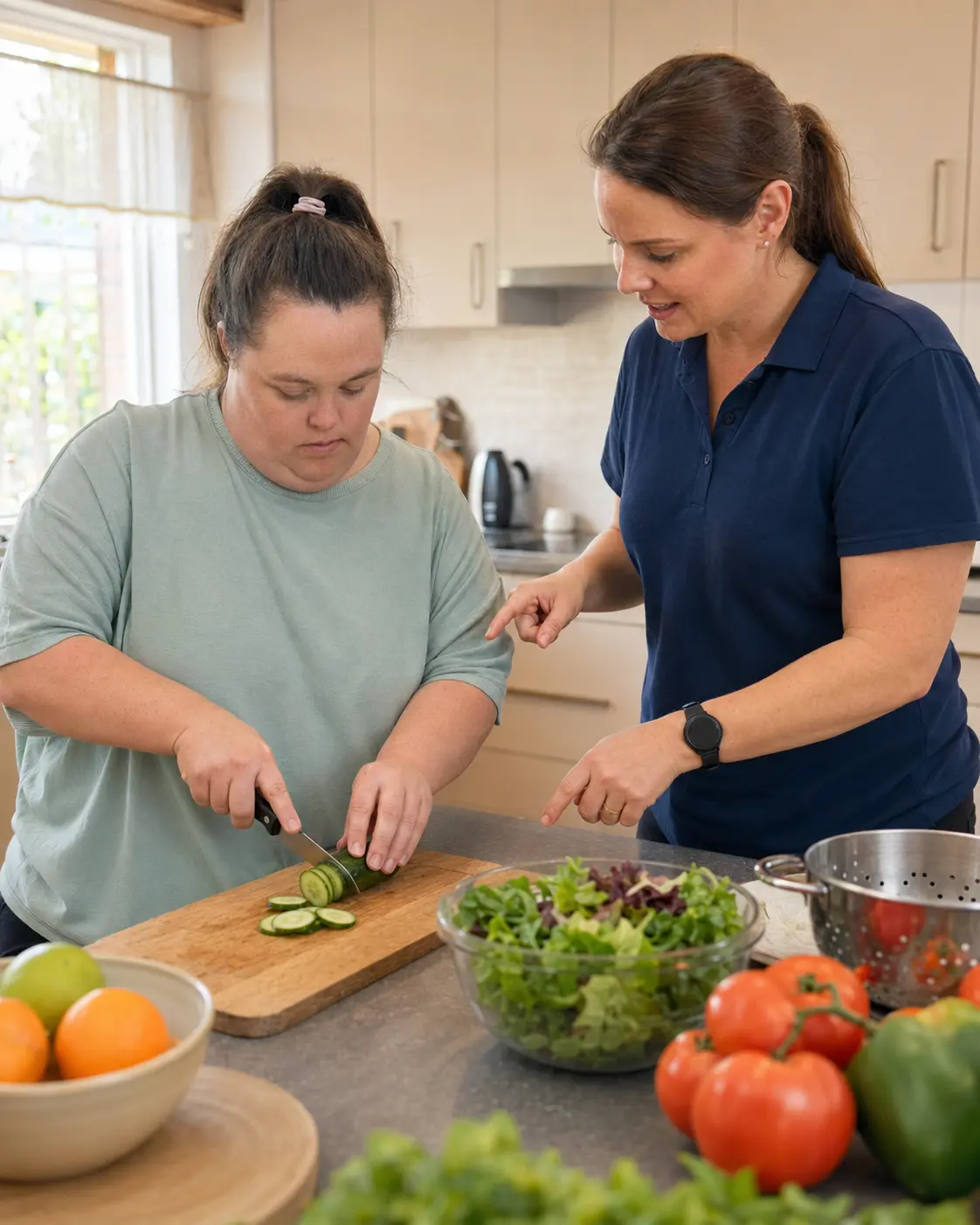
Life skills don't stick when they're taught in a classroom and abandoned at the door. They stick when they're practised in the real place, at the real moment, with someone patient enough to let you try.
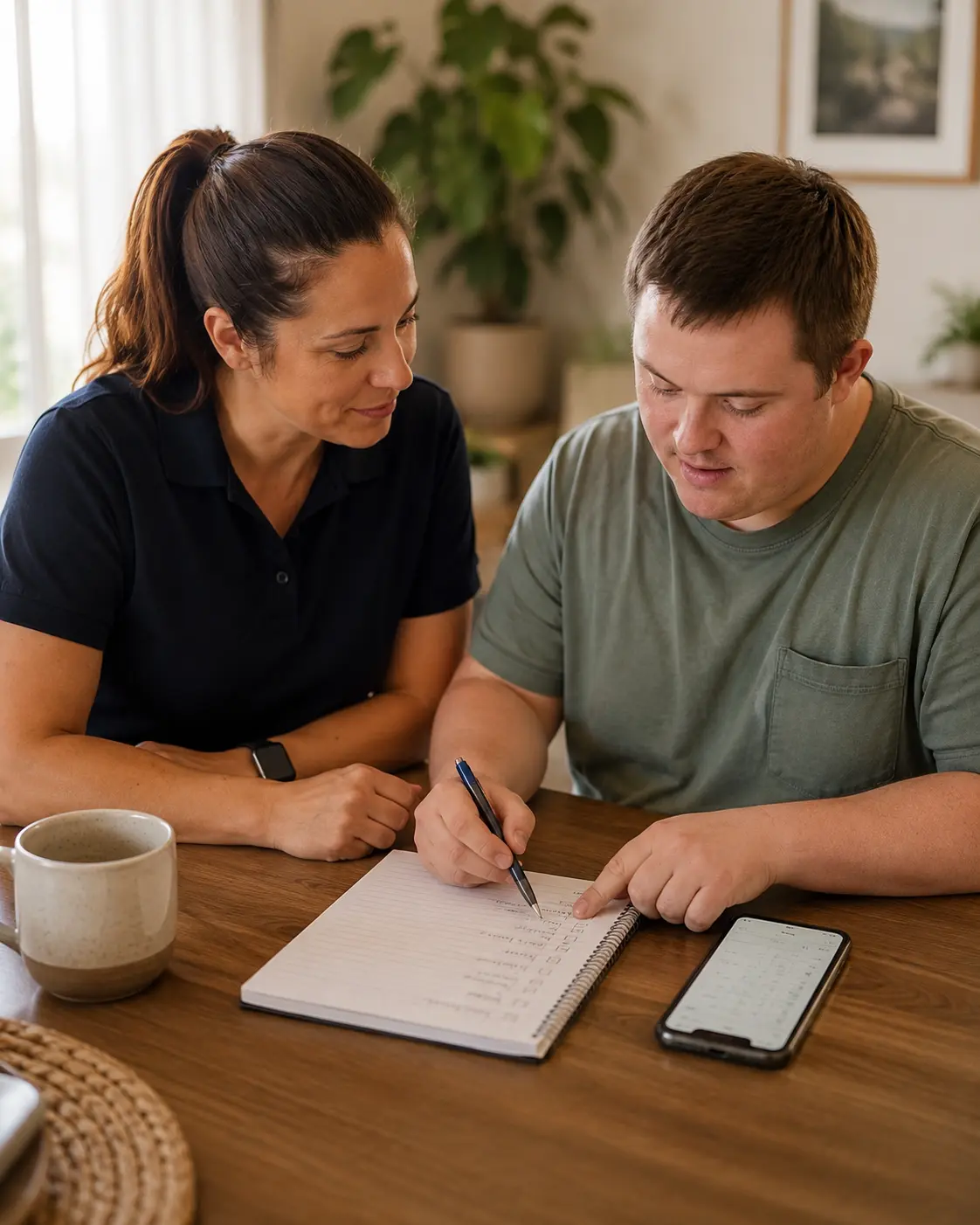
That's how we work. If you want to learn to use public transport, we get on the train together. If you want to cook for yourself, we go to the supermarket, bring the ingredients home, and make a real dinner. If you want to handle your own money, we open the banking app side-by-side until it feels familiar.
And we go at your pace. Repetition isn't failure — it's how skills become second nature. We'll practise together as many times as it takes for you to feel confident doing it alone.
The skills we most often
help with building
These are the most common areas participants ask us to help with. Each card shows what we work on and what success tends to look like. If your goal isn't listed, just ask — we work on whatever matters to you.
Money & Budgeting
Budgeting apps, bill tracking, grocery budgeting, understanding payslips, ATM and card use, avoiding scams, and managing an NDIS plan budget.
Cooking & Meal Planning
Meal planning for the week, grocery shopping, basic recipes, kitchen safety, reading labels and use-by dates, storing leftovers, cooking for guests.
Travel & Navigation
Myki and public transport, reading timetables, walking routes, using maps apps, rideshare apps, and building confidence to travel independently.
Digital & Tech Skills
Email, video calls, online banking, online shopping, MyGov, social media safety, password hygiene, and using apps confidently without being overwhelmed.
Social & Communication
Starting conversations, making and keeping friendships, reading social cues, navigating conflict, using the phone comfortably, and advocating for yourself in new situations.
Home & Self-Care
Cleaning routines, laundry, personal hygiene, medication organisation, basic maintenance, and the rhythms that keep a home running smoothly week to week.
Four principles we
never compromise on
How we teach matters as much as what we teach. These four principles sit behind every life-skills session we run.
Real life, real time
We practise where the skill actually gets used — your kitchen, your train line, your bank app. Not a classroom. Not role-play.
Your pace, not ours
Repetition isn't a failure mode — it's how skills become second nature. We'll practise as many times as it takes.
Gradually step back
Full support at first, then prompts, then observing, then checking in. The goal is always to step back — not be needed forever.
Celebrate the win
Every small milestone matters. Boarding the tram alone, cooking one dinner, sending one email — these are the moments that build confidence.
Everyone learns
differently
One person learns best by watching it done a few times, then trying. Another wants a written checklist. Someone else needs to break it down into five tiny steps with pauses in between. We adapt to you — not the other way around.
Our support workers are trained to recognise different learning styles and adjust their teaching on the fly. We'll ask you what works, try a few approaches, and settle into the rhythm that fits you.
From supported
to self-led
We don't just teach — we actively plan our own redundancy. Most skills move through these stages.
Full support — we do it together
Side-by-side, every step. You watch, you try, we catch anything that doesn't feel right. No pressure to do anything solo yet.
Prompted — you lead, we prompt
You do the task, we offer reminders or nudges along the way. The skill is becoming yours, but the safety net is still there.
Supervised — we observe, you lead
You're doing it largely on your own. We're present but hands-off — a backstop, not an instructor. Confidence building.
Independent — you own it
The skill is yours. We move on to the next goal — or step back entirely if this was what you came for. Either way, well done.
Who this is for
Life skills development suits NDIS participants at any stage — young adults moving toward independence, people rebuilding after a life change, or anyone who just wants a few practical areas shored up.
We support participants across Melbourne's eastern and south-eastern suburbs.
How it's funded
Life skills support is typically funded under Capacity Building — Increased Social & Community Participation or Improved Daily Living in your NDIS plan.
We work with both plan-managed and self-managed participants. Not sure what's in your plan? Call us and we'll read through it together.
What do you
want to learn?
Tell us the skill you want to build or the area of life you'd like more independence in. We'll map out what's realistic, at what pace, and we'll be the patient, consistent teacher you've been looking for.